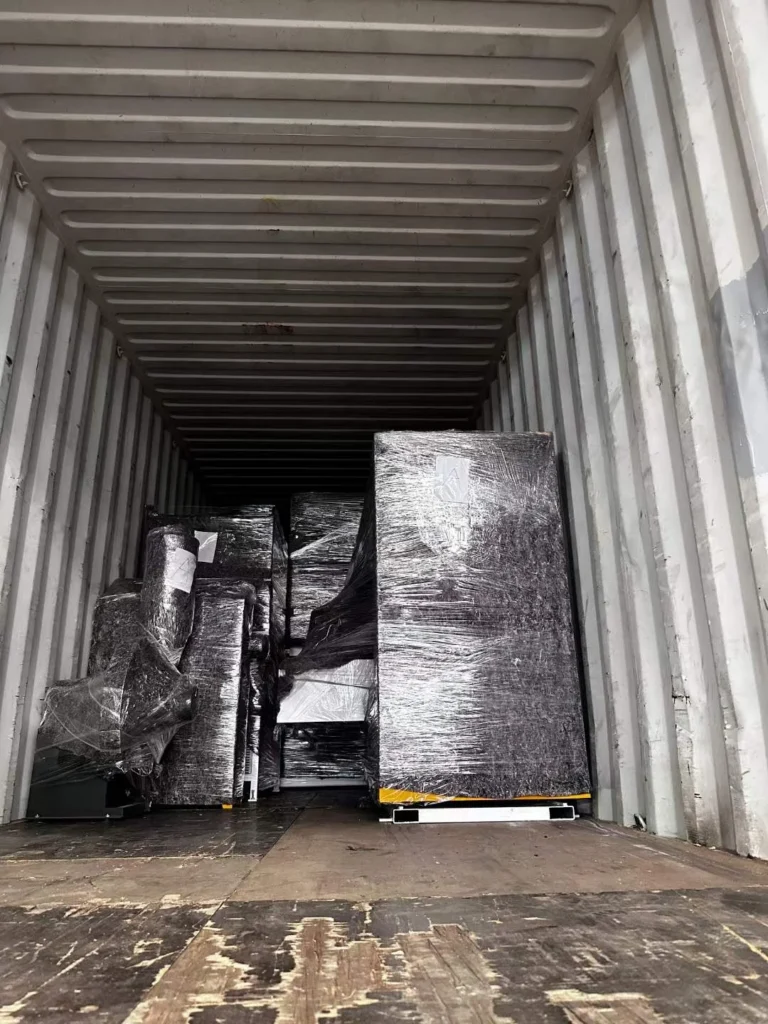
Automatic Box Stitching Machine Loaded for Overseas Delivery
Another Automatic Box Stitching Machine Ready for Overs […]
Automatic Box Stitching Machine Loaded for Overseas Delivery Read More »
Another Automatic Box Stitching Machine Ready for Overs […]
Automatic Box Stitching Machine Loaded for Overseas Delivery Read More »
Fruit packaging looks simple, but the choice of corruga
Why E-Flute Corrugated Board Is Widely Used for Fruit Boxes? Read More »
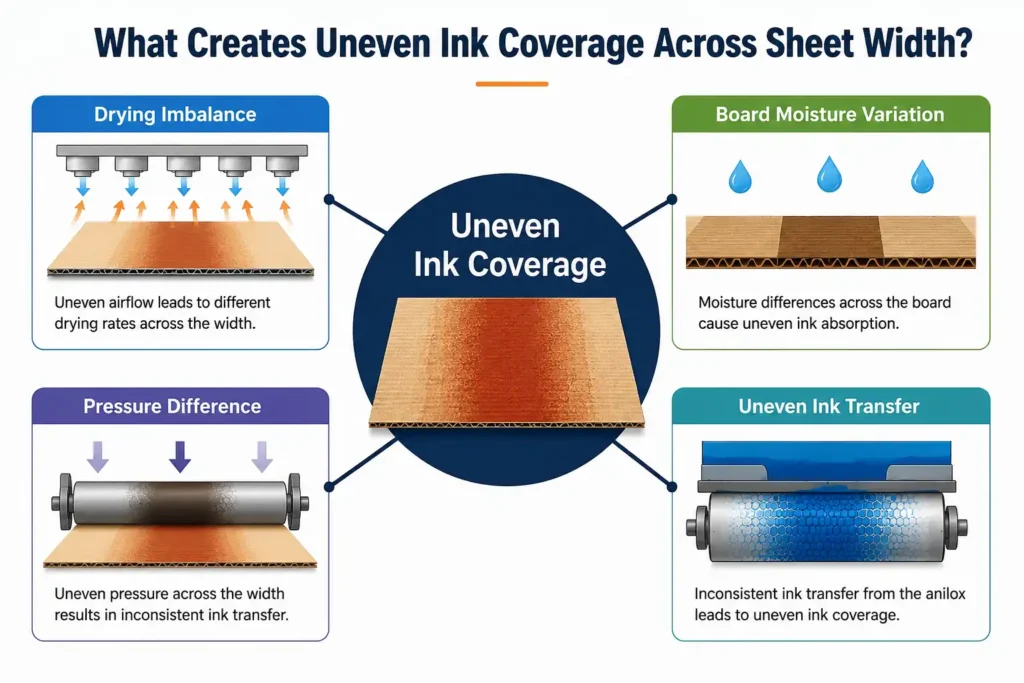
Uneven ink coverage in corrugated printing is often blamed on ink, anilox rolls, or doctor blades. In reality, drying imbalance, board moisture variation, and pressure differences across machine width are frequently the real causes. This article explains how to identify the source before making unnecessary adjustments.
Uneven Ink Coverage in Corrugated Printing — What Actually Causes It? Read More »
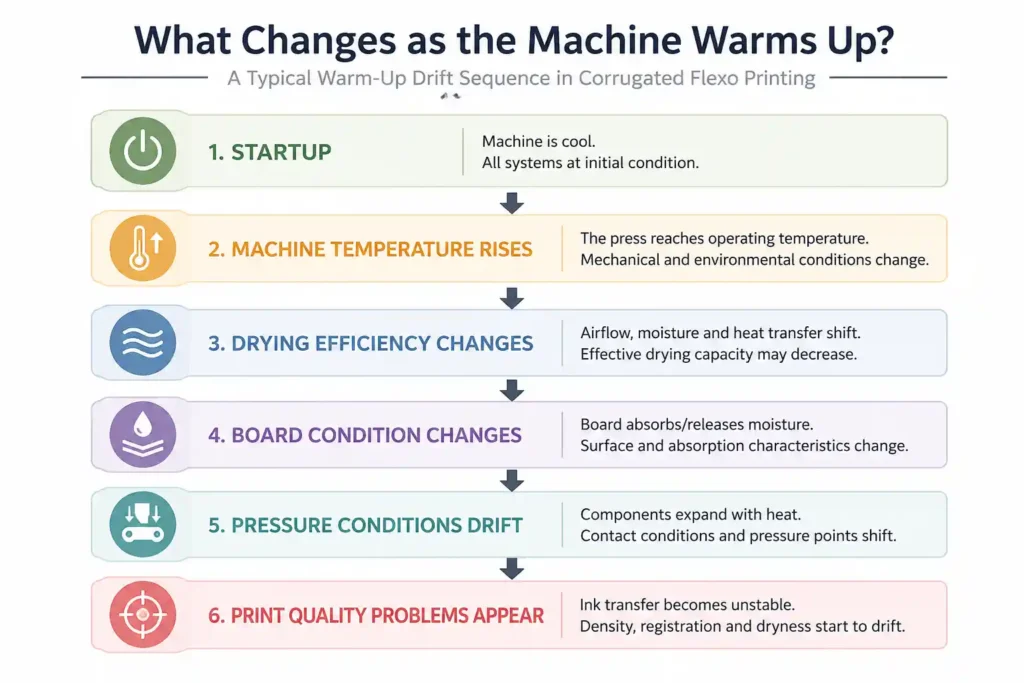
In corrugated flexo printing, quality problems often appear only after the machine has been running for a while. This article explains what changes first as the system warms up and how to diagnose the real cause.
Introduction One of the questions I hear most often fro
Corrugated Flute Types Guide: Thickness, Strength & Applications Read More »
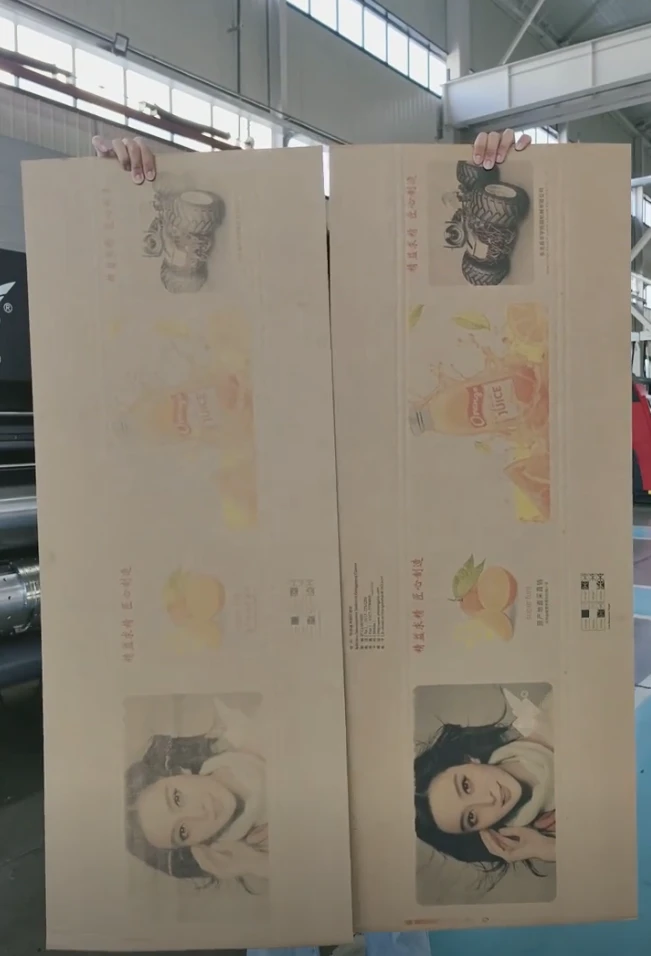
In corrugated box plants, flexo print quality often drops after several hours of running. This article explains why flexo printing issues appear during long runs, what changes first inside the system, and how to diagnose the real cause without blaming the ink.
Why Flexo Print Quality Drops During Long Runs — And What to Check First Read More »
Ink not drying in flexo printing is often blamed on environment or ink. This real production case reveals the actual cause — and how system imbalance leads to drying failure.
Case: Ink Not Drying Was Blamed on Humidity — But That Was Not the Real Problem Read More »
Ink not drying in flexo printing is often blamed on temperature or humidity. In reality, it’s usually caused by system imbalance. This article explains the real causes and how to diagnose the issue correctly.
Why Ink Is Not Drying in Flexo Printing — And What Most People Miss Read More »
Ghosting in flexo printing is often misdiagnosed as an ink issue. This guide explains the real causes from a system perspective and provides a clear step-by-step process to identify and fix the problem efficiently.
Why Flexo Printing Ghosting Happens — And What You Should Check First Read More »
Most printing quality problems are not caused by ink, but by upstream system instability. This article explains how board, pressure, and drying conditions influence ink transfer — and provides a simple diagnostic path to identify the real root cause quickly.
Printing defects are often blamed on ink — but in many corrugated packaging plants, ink is rarely the true root cause. This technical insight explains why misdiagnosis happens so frequently and how printing pressure, substrate behavior, drying performance, and environmental variables can create defects that closely resemble ink failures. Through practical examples and a five-minute diagnostic framework, the article helps production teams quickly distinguish between material issues and system-level problems, reduce downtime, avoid unnecessary supplier disputes, and restore stable printing performance with faster, more accurate troubleshooting decisions.
Why Your Printing Quality Problems Are Often Misdiagnosed as Ink Issues Read More »
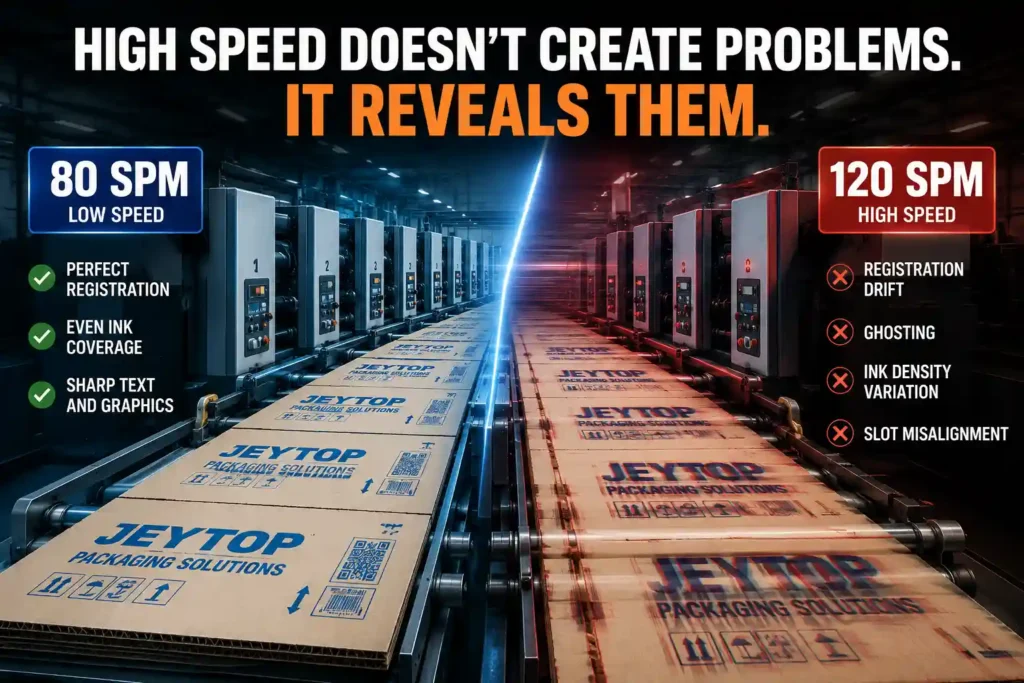
When printing speed increases, registration problems often emerge—not because of incorrect settings, but because the system is approaching or exceeding its synchronization limits.
This article provides a practical diagnostic framework to help corrugated printing operators quickly distinguish between physical capability boundaries and system-level coordination failures. Instead of chasing registration parameters, it guides you to make the right decision—continue, slow down, or stop—before misregistration turns into irreversible scrap and production loss.
Printing Misregistration Gets Worse After Speed Increase — What Should You Check First? Read More »