Blog

Sudden Color Variation During Printing: Ink Problem or Printing System Issue?

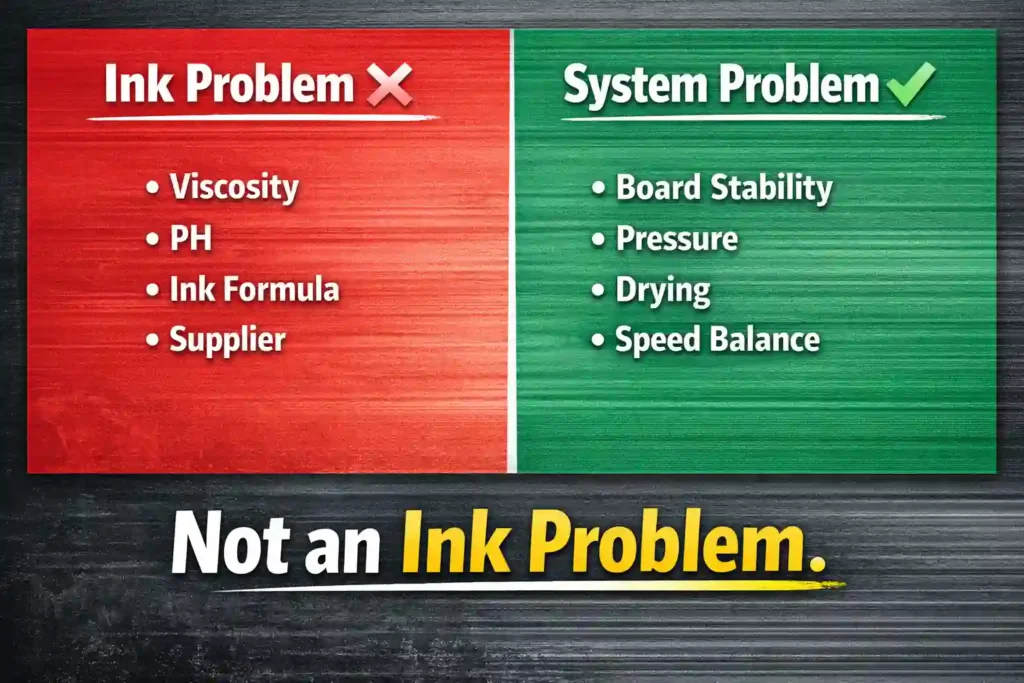
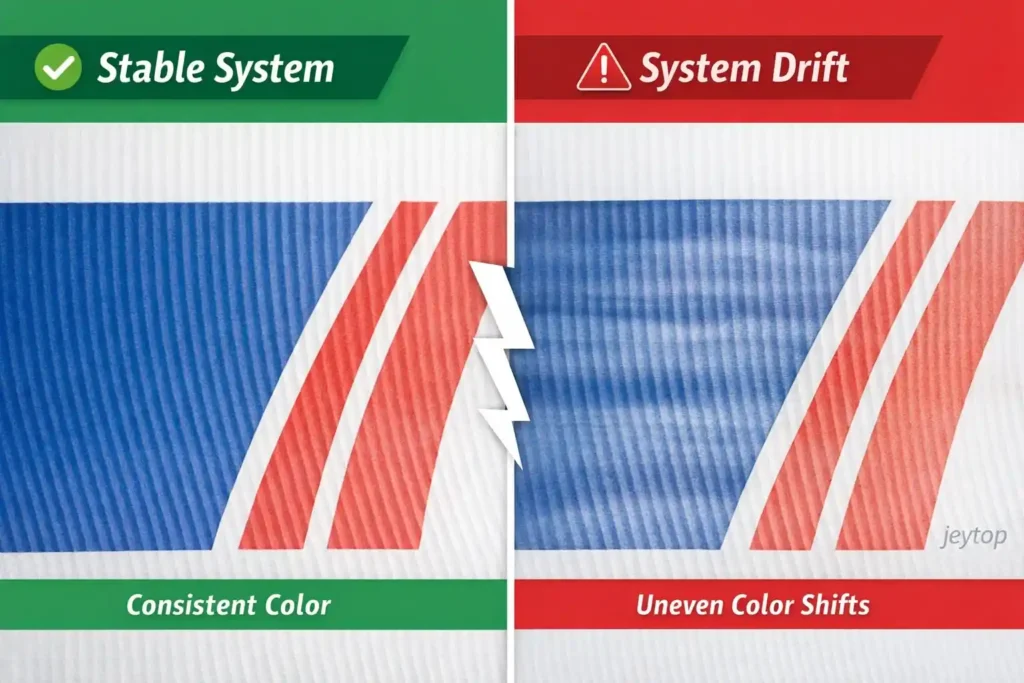
When color variation appears during printing while all parameters remain unchanged, the root cause is rarely the ink itself. In most cases, it is an early warning of printing system instability. This article provides a practical 5-minute judgment framework to help decision-makers quickly distinguish between material consistency issues and system-level instability, avoid costly misdiagnosis, and protect quality and profit in high-speed production environments.

Sudden Color Variation During Printing: Ink Problem or Printing System Issue? Read More »

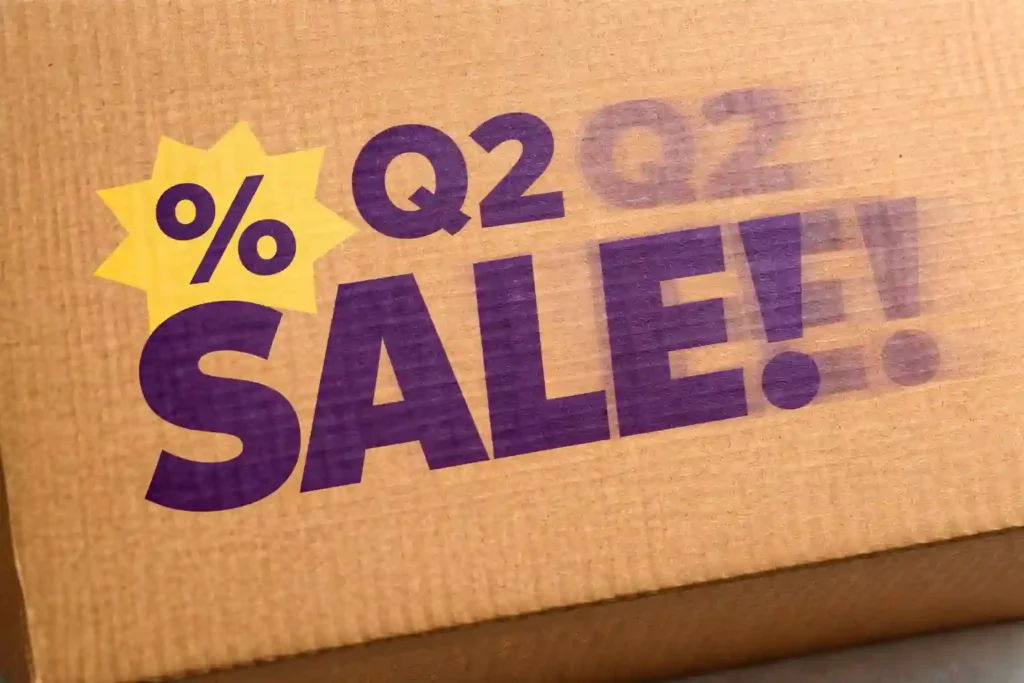
Stable printing color compared with system induced color variation

Low-Grammage Boards Failing to Bond?Stop Adjusting Glue—Get the Direction Right First

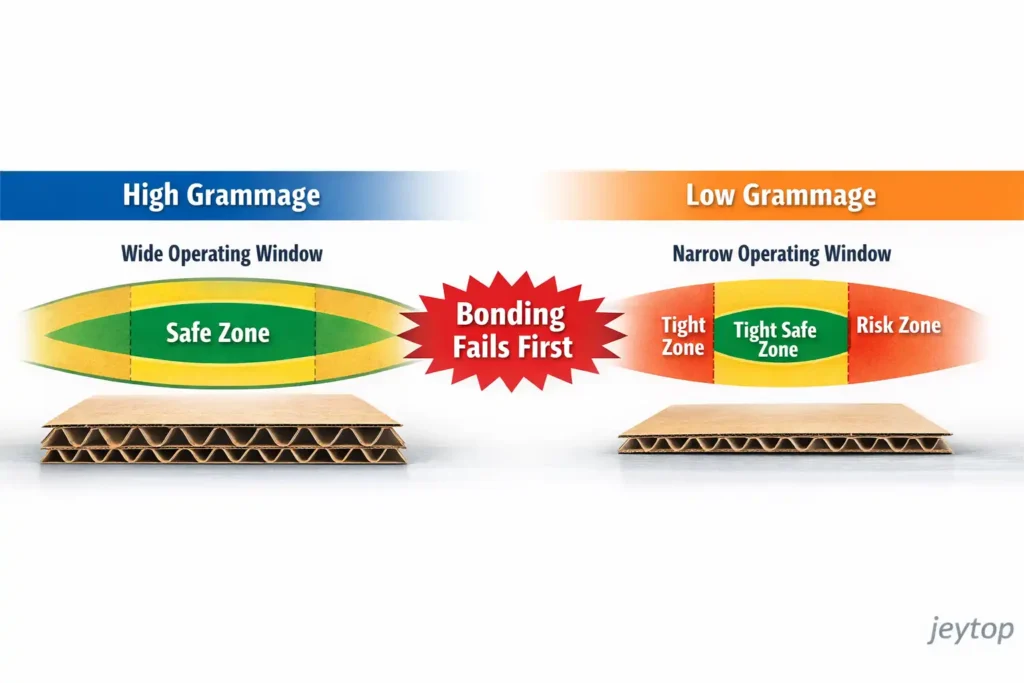
Low-grammage corrugated board bonding failures are rarely caused by glue itself. In most cases, they signal that the system’s tolerance window has already collapsed. This article provides a clear, time-critical decision sequence to help operators and managers quickly distinguish between material boundary issues and system capability failures—before instinctive adjustments make the problem irreversible.

Low-Grammage Boards Failing to Bond?Stop Adjusting Glue—Get the Direction Right First Read More »

Low grammage corrugated board tolerance window collapses compared to high grammage

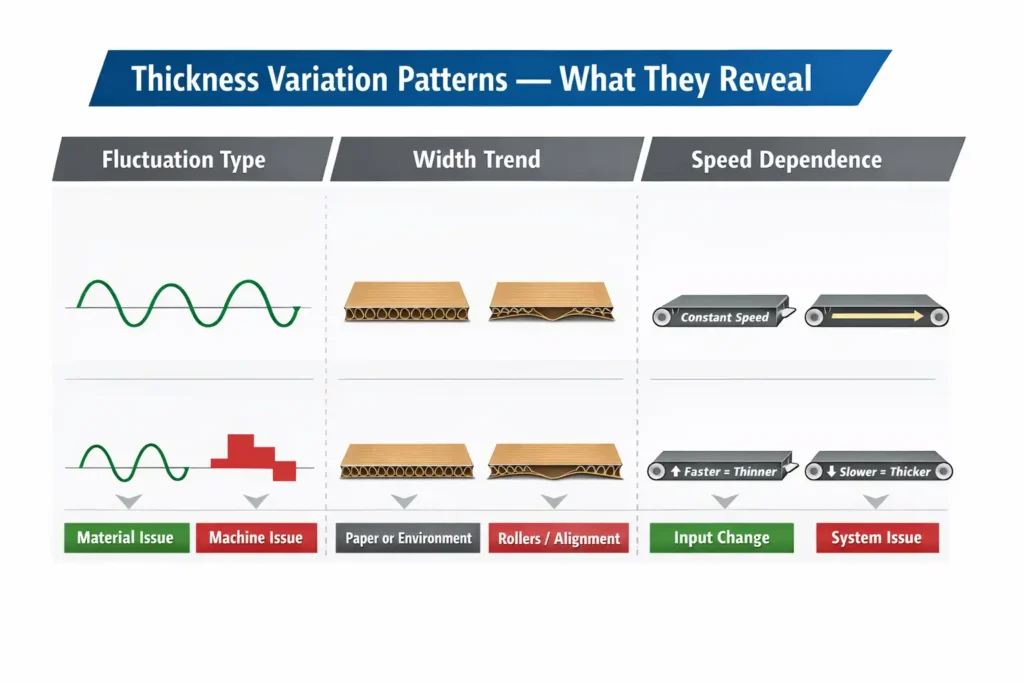
Corrugated Board Thickness Suddenly Unstable?How to Tell in 3 Minutes: Paper Issue or Machine Issue

When corrugated board thickness suddenly becomes unstable, the biggest risk is misjudging the cause. This article provides a clear, three-minute diagnostic framework to quickly distinguish whether thickness variation originates from paper properties or equipment response—before unnecessary adjustments or costly maintenance decisions are made.

Corrugated Board Thickness Suddenly Unstable?How to Tell in 3 Minutes: Paper Issue or Machine Issue Read More »

Corrugated board thickness variation patterns for troubleshooting

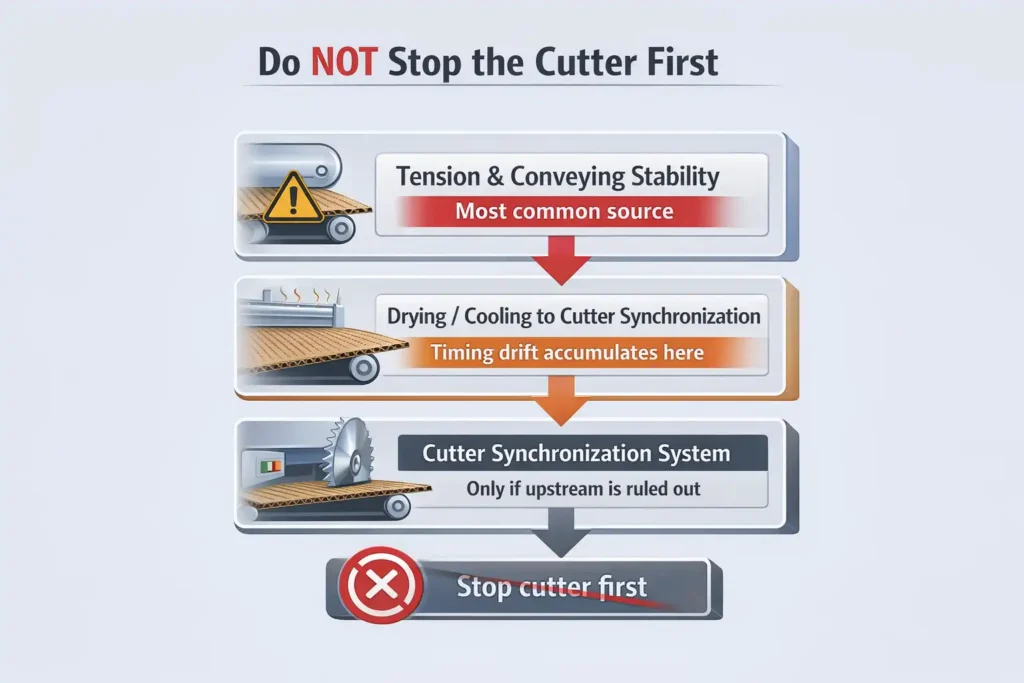
Sudden Full-Width Delamination at High Speed—Where Should You Stop First?

Sudden full-width delamination at high speed is not a parameter issue—it is a system-level failure signal.
This article explains where to stop first to preserve evidence, avoid masking the root cause, and regain control within the first critical minutes. It provides a clear stopping strategy and a 10-minute diagnostic logic to prevent delayed scrap, misadjustments, and escalation into a major incident.

Sudden Full-Width Delamination at High Speed—Where Should You Stop First? Read More »

Correct stop location for high speed full width delamination on a corrugator line

Continuous Delamination After a Paper Change?How to Quickly Tell Whether It’s the Paper or the Process

Continuous delamination right after a paper change is usually a system imbalance—not a single fault.
This article provides a neutral 10-minute decision checklist to determine whether the issue comes from paper condition, heat mismatch, or process setup—before blame, guesswork, or unnecessary adjustments make the problem worse.

Continuous Delamination After a Paper Change?How to Quickly Tell Whether It’s the Paper or the Process Read More »

10 minute decision flow for delamination after paper change

Sudden One-Way Warp in Corrugated Board? Don’t Touch the Speed—Check These Three Things First

Sudden one-way warp on a corrugator line is rarely a speed problem.When warp suddenly worsens in one direction, adjusting speed only masks the real issue. This 10-minute checklist helps operators quickly identify whether the root cause lies in paper condition, heat imbalance, or mechanical tension—before ineffective adjustments turn a minor imbalance into scrap or downtime.

Sudden One-Way Warp in Corrugated Board? Don’t Touch the Speed—Check These Three Things First Read More »

10 minute decision flow for one way warp in corrugated board

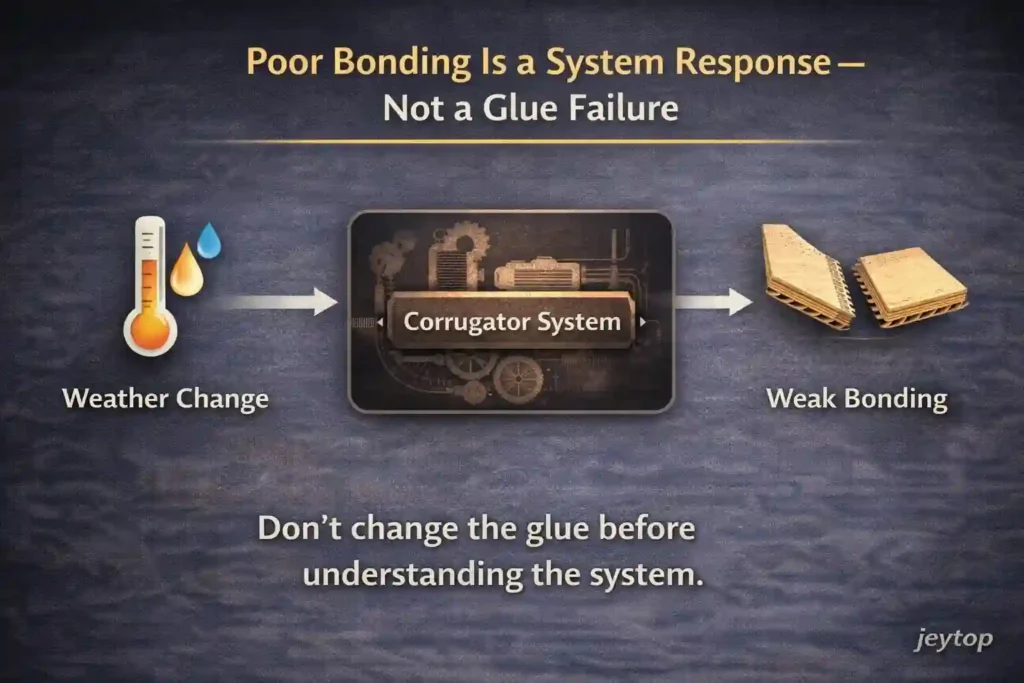
When the Board “Looks Bonded” After the Double Backer—Don’t Be Misled,Check These Three Things First

Many corrugator bonding failures don’t appear at the double backer.
This article helps you identify false bonding — when boards look fine on the line but fail later — and shows how to avoid wrong on-line decisions that turn hidden defects into customer-side delamination.

When the Board “Looks Bonded” After the Double Backer—Don’t Be Misled,Check These Three Things First Read More »

Process diagram explaining false bonding after the double backer and delayed delamination
error: Content is protected !!
滚动至顶部