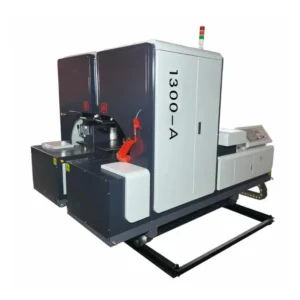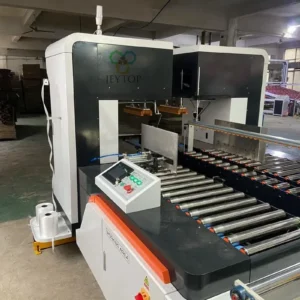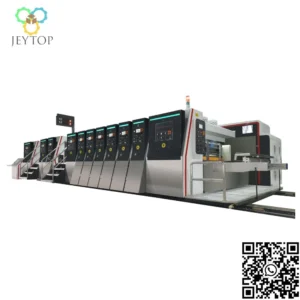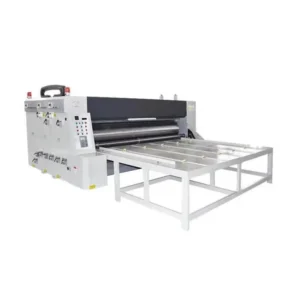
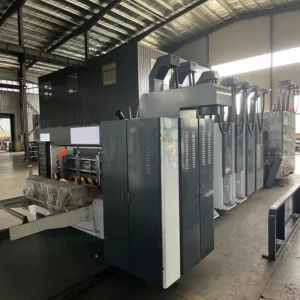
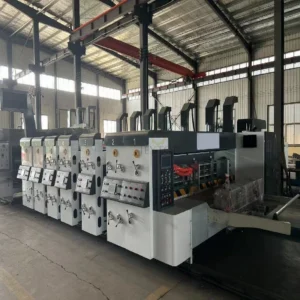
Product Overview
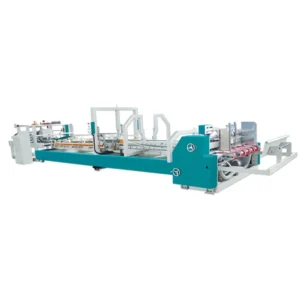
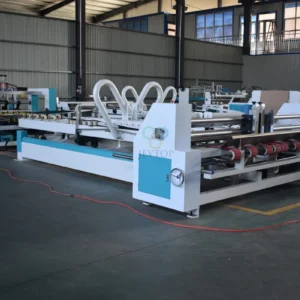
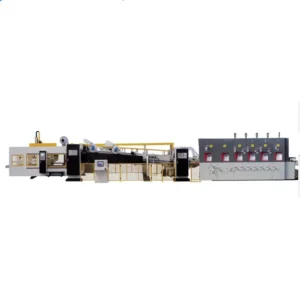
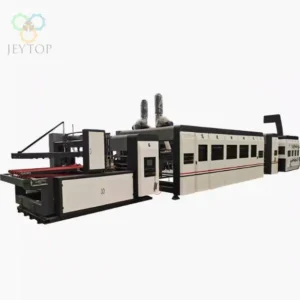
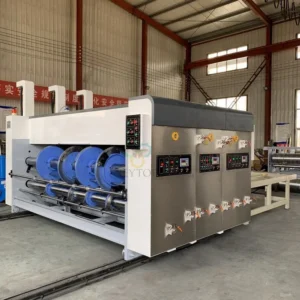
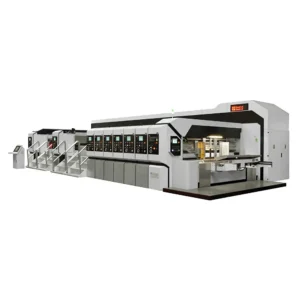
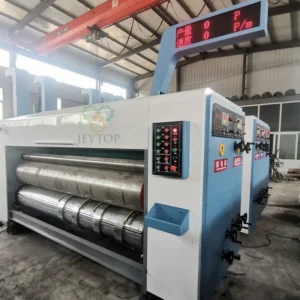
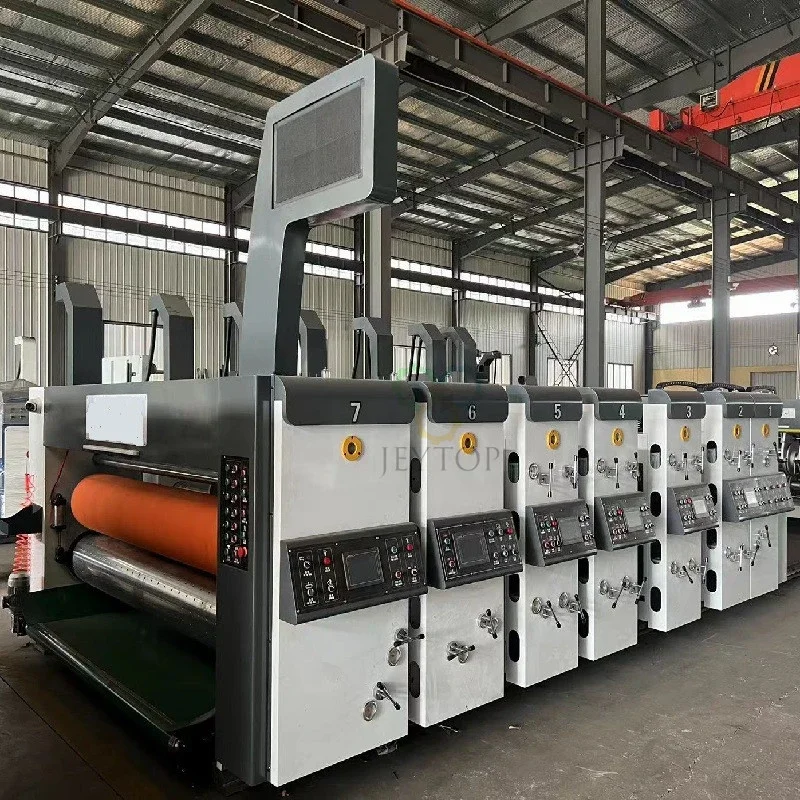
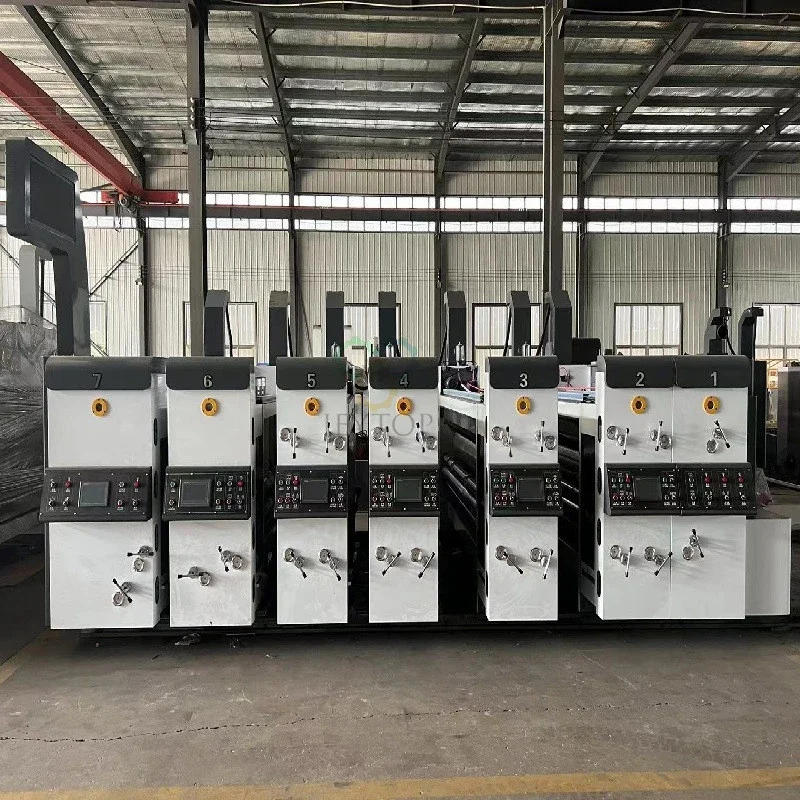
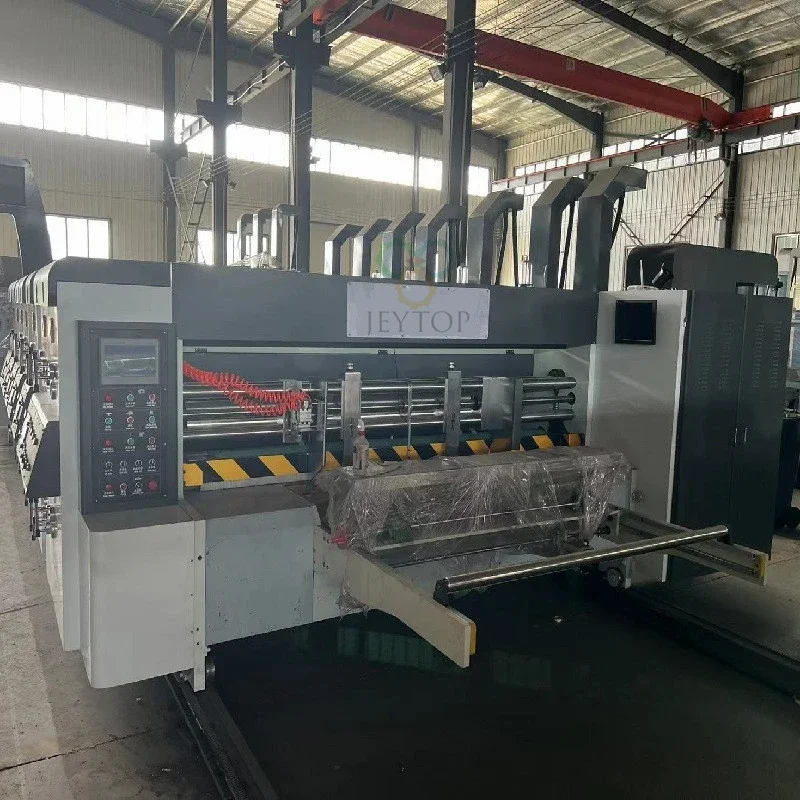
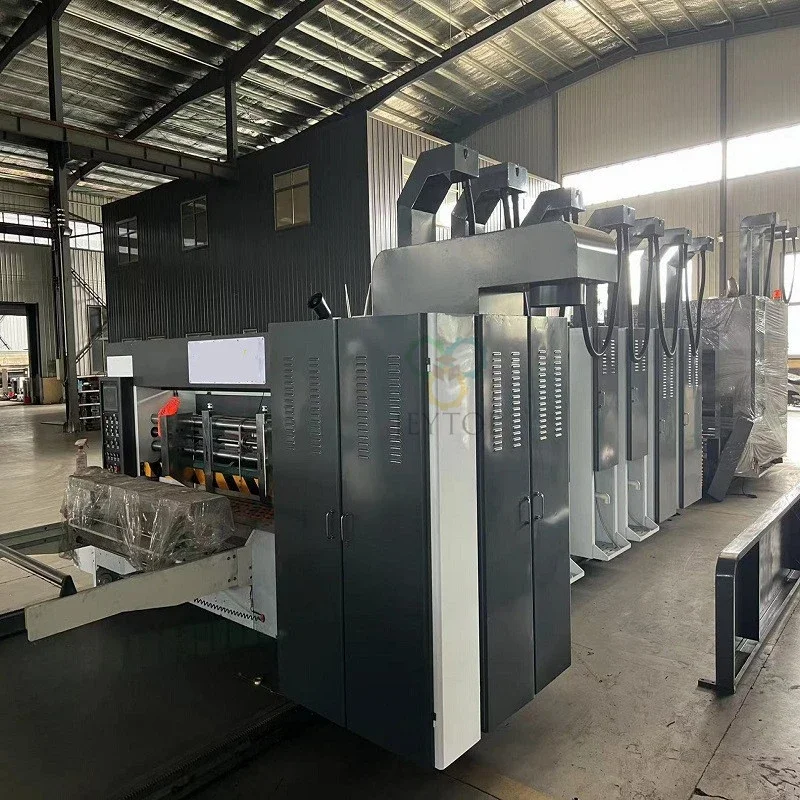
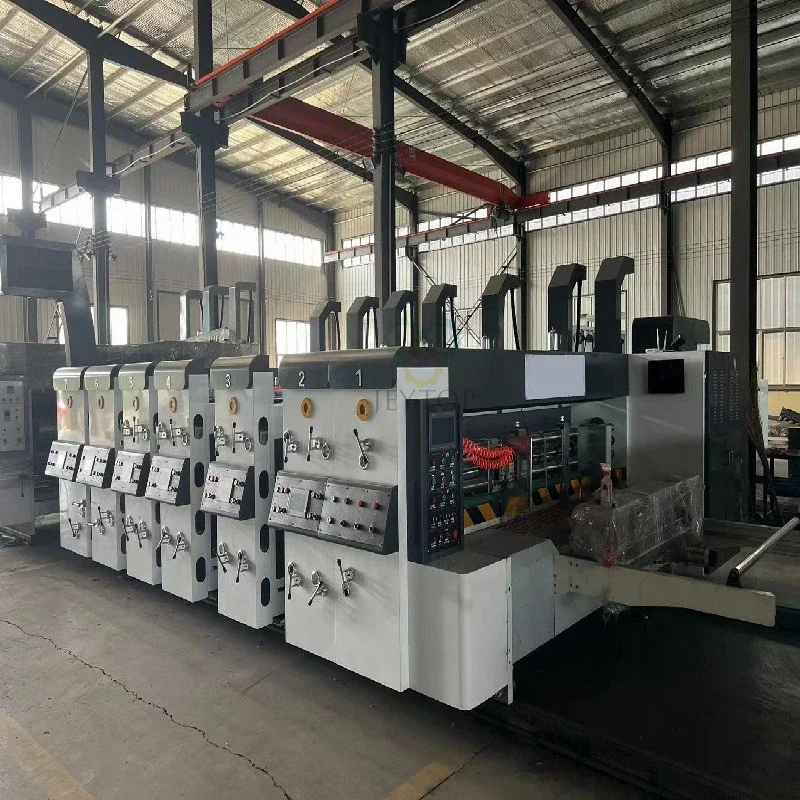
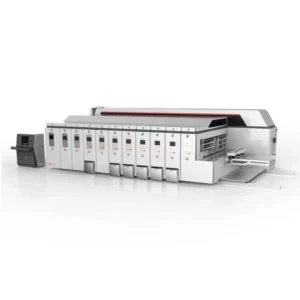
The Vacuum Transfer Flexo Printer Slotter Die Cutter is an automatic corrugated cardboard processing machine integrating vacuum transfer, flexographic printing, slotting and die cutting functions.
The machine adopts a full vacuum negative pressure conveying system to transport cardboard without traditional pressure roller feeding during the main conveying process. This structure helps reduce pressure marks on corrugated board and provides stable sheet positioning for multi-color printing, slotting and die cutting operations.
It is suitable for carton manufacturers producing printed corrugated boxes, especially applications requiring stable conveying, accurate registration and large-area printing.
Key Features
Full Vacuum Transfer System
The machine adopts a full vacuum suction conveying system with multi-row staggered suction rollers to provide stable cardboard transportation.
Compared with traditional pressure roller conveying methods, the vacuum transfer structure reduces direct mechanical pressure on the corrugated board surface.
The vacuum conveying system provides the following advantages:
- Helps prevent flute crushing and pressure marks on corrugated board
- Suitable for large-area and full-sheet printing applications
- Reduces the risk of ink contamination caused by pressure roller contact
- Helps maintain stable sheet movement for warped cardboard
- Supports consistent registration during multi-color printing
- Reduces frequent adjustment of pressure rollers during production setup
- Helps improve material utilization for large printing layouts
The vacuum negative pressure can be adjusted by frequency conversion according to different cardboard specifications and conditions.
Machine Structure and Transmission
The machine is designed with a stable mechanical structure for continuous corrugated cardboard processing.
The drive rollers are manufactured from high-quality steel with surface grinding and hard chrome plating.
The transmission gears are hardened and precision ground to maintain accurate mechanical transmission.
The keyless connecting ring structure reduces transmission gaps and helps maintain long-term printing registration accuracy.
The automatic oil balance device maintains lubrication supply for each unit.
The machine supports automatic zero return and reset functions.
The computer control system can store commonly used production orders. Up to 1000 orders can be stored for convenient order change management.
Emergency stop switches are installed on each unit to improve operator safety.
Printing Unit
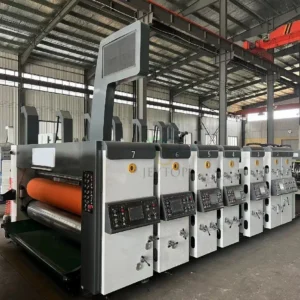
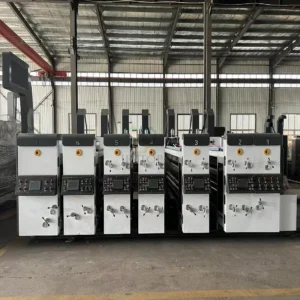
The printing unit adopts vacuum adsorption transfer with multi-row staggered roller arrangement to maintain stable cardboard positioning.
The vacuum chamber adjustment can adapt to different cardboard sizes and production conditions.
The printing plate cylinder adopts servo-controlled phase adjustment.
The horizontal printing adjustment uses ball screw structure for accurate positioning.
The printing plate mounting system adopts automatic locking and positioning structure.
The anilox roller adopts direct drive structure without chain or timing belt transmission.
The rubber roller and anilox roller support convenient replacement.
Available printing configurations include:
- Rubber roller ink supply system
- Doctor blade ink system (optional)
- Ceramic anilox roller (optional)
The automatic cleaning device helps simplify anilox roller maintenance and ink recovery.
Drying Unit (Optional)
The drying unit is an optional configuration according to printing requirements.
For conventional water-based ink printing, the drying system mainly uses infrared drying technology. Some configurations can combine infrared drying with hot air circulation to improve drying performance.
Available options include:
- Infrared (IR) drying
- Infrared + hot air circulation drying
The drying system is controlled through PLC and human-machine interface, with temperature monitoring and alarm functions.
Slotting Unit
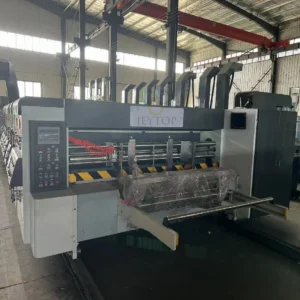
The slotting unit adopts a six-axis structure:
Pre-compression
↓
Creasing
↓
Slotting
The pre-compression structure helps improve cardboard forming during slotting.
The tool holder adopts servo motor control for horizontal movement.
The double ball screw adjustment structure provides accurate positioning and stable movement.
The slotting structure supports adjustment for different corrugated board thicknesses.
Optional portable hole die holder is available.
Die Cutting Unit
The die cutting unit adopts horizontal movement compensation structure.
The die cutting compensation system helps maintain stable cutting performance during rubber pad wear.
The rubber pad repair device allows repeated repair of the rubber pad surface.
The die cutting roller adopts automatic pneumatic separation during production stops to reduce unnecessary wear.
Technical Parameters
Technical parameters can be customized according to customer requirements.
| Model | 920 | 924 | 1224 | 1228 | |
| Max speed (pcs/min) | 280 | 280 | 250 | 230 | |
| Max Feeding size(mm) | 900*2000 | 900*2400 | 1200*2400 | 1200*2800 | |
| Min Feeding Size(mm) | 300*600 | 300*600 | 350*600 | 350*600 | |
| Skip Feeding | 1200*2000 | 1200*2400 | 1500*2400 | 1500*2800 | |
| Max printing size(mm) | 900*1960 | 900*2360 | 1200*2360 | 1200*2760 | |
| Standard plate thickness(mm) | 7.2 | 7.2 | 7.2 | 7.2 | |
| Min slotting interval (single axis) | Slotting type R | 130*130*130*130 | 130*130*130*130 | 130*130*130*130 | 130*130*130*130 |
| Slotting type L | 230*65*230*65 | 230*65*230*65 | 230*65*230*65 | 230*65*230*65 | |
| Minimum slotting interval (double axis) | Slotting type R | 130*130*130*130 | 130*130*130*130 | 130*130*130*130 | 130*130*130*130 |
| Slotting type L | 230*65*230*65 | 230*65*230*65 | 230*65*230*65 | 230*65*230*65 | |
| Max slotting depth(mm) | 250 | 250 | 300 | 300 | |
Suitable Materials
Suitable for:
- 3 Ply Corrugated Board
- 5 Ply Corrugated Board
- 7 Ply Corrugated Board
Applications
Suitable for:
- Corrugated Board Plants
- Carton Factories
- Packaging Companies
- Industrial Packaging Manufacturers
Applicable Products:
- Shipping Boxes
- Export Cartons
- Industrial Packaging Boxes
- Printed Corrugated Boxes
- E-commerce Boxes
Working Process
Cardboard Feeding
↓
Vacuum Negative Pressure Transfer
↓
Flexographic Printing
↓
Infrared Drying (Optional)
↓
Slotting
↓
Die Cutting
↓
Finished Carton Sheets
Why Choose This Machine
- Full vacuum transfer system for non-pressure cardboard conveying
- Suitable for large-area and multi-color printing applications
- Reduced risk of pressure marks on corrugated board
- Stable cardboard positioning during printing and converting
- Servo-controlled printing phase adjustment
- Integrated printing, slotting and die cutting functions
- Optional infrared drying system for water-based ink applications
FAQ
What is the difference between vacuum transfer and pressure roller feeding?
Vacuum transfer uses negative pressure suction to move cardboard, reducing direct pressure on the board surface. Pressure roller feeding relies on mechanical contact, which may create pressure marks in some applications.
Why is vacuum transfer suitable for high-quality carton printing?
Vacuum transfer helps maintain stable cardboard positioning without pressing the printed surface, making it suitable for multi-color printing, large-area printing and applications requiring stable registration.
Can vacuum transfer handle warped corrugated cardboard?
Yes. The vacuum suction system helps stabilize slightly warped sheets during conveying and reduces slipping during processing.
Is the drying unit included as standard equipment?
The drying unit is an optional configuration. For conventional water-based ink printing, infrared drying is commonly selected according to customer requirements.
What factors should be considered when selecting this machine?
Customers should consider printing requirements, cardboard size range, production volume, number of printing colors, drying requirements and whether additional functions such as stacking are needed.
What maintenance is required for the vacuum transfer system?
Regular cleaning of suction components, dust removal parts and conveying surfaces helps maintain stable vacuum conveying performance.