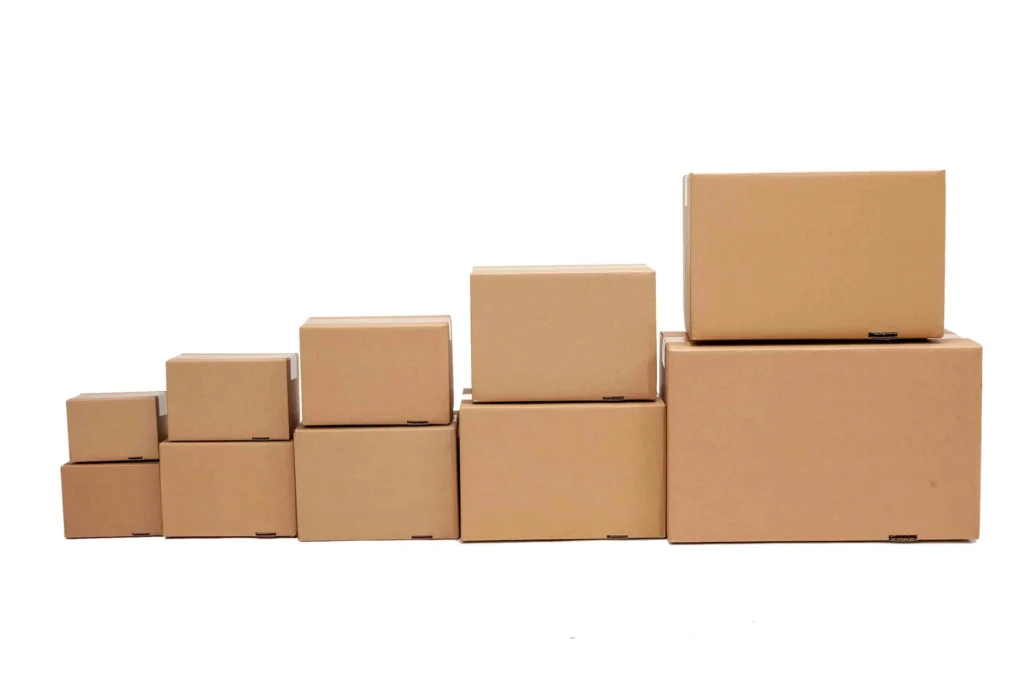
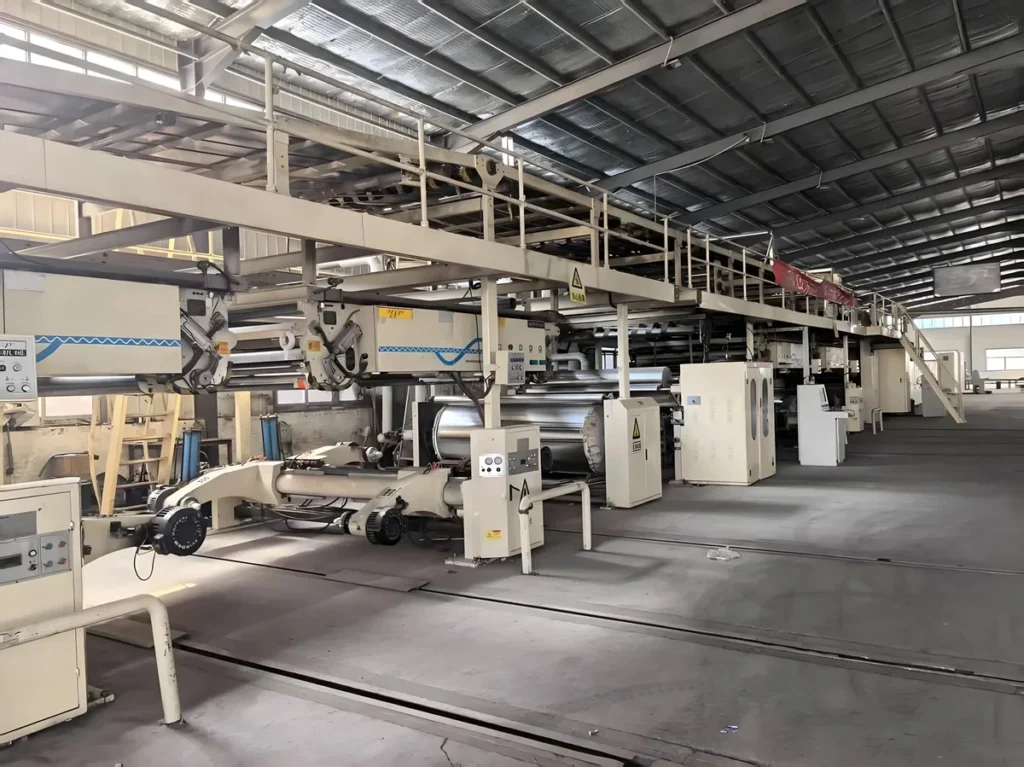
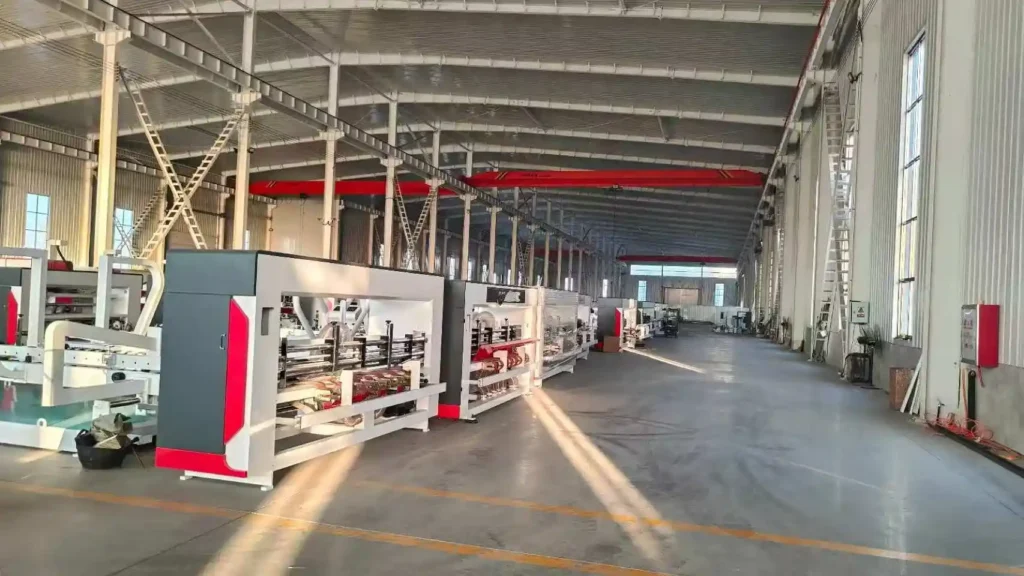
Fruit packaging looks simple, but the choice of corrugated board can directly affect cost, protection, printing quality, and transportation efficiency.
Among all flute types, E-flute corrugated board has become one of the most widely used materials for fruit boxes, especially for premium fruits, supermarket-ready packaging, and export cartons.
But why exactly is E-flute so popular? And is it always the best solution?
Let’s take a closer look from both packaging and production perspectives.
What Is E-Flute Corrugated Board?
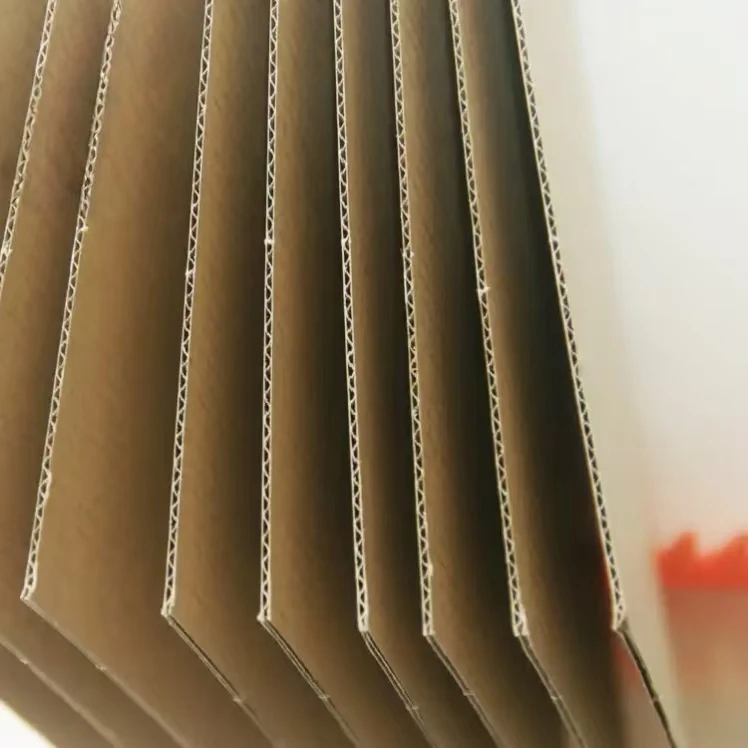
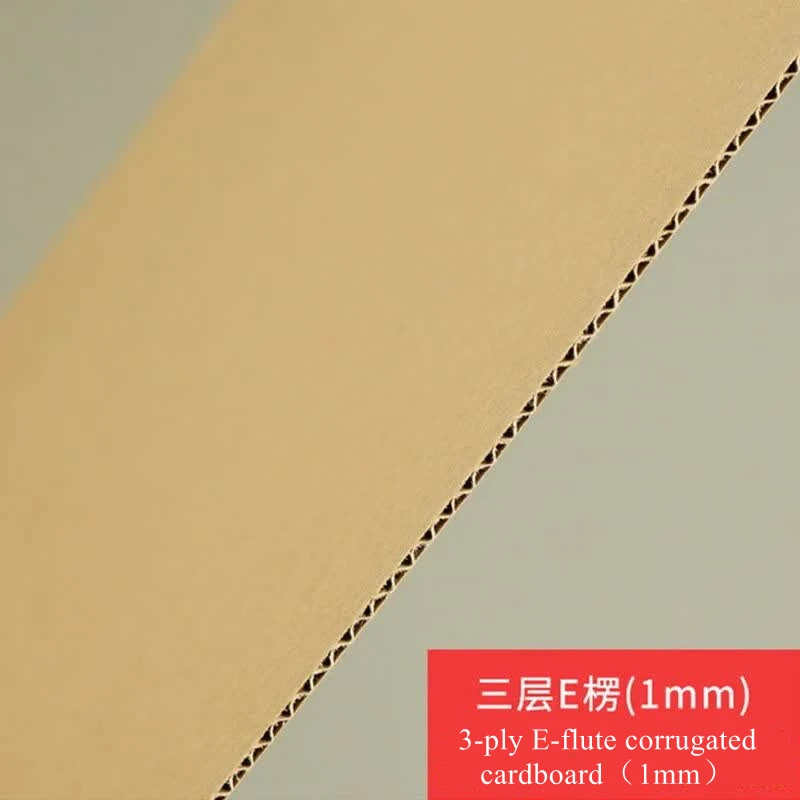
E-flute is one of the fine flute types in corrugated board structure.
Compared with B-flute or C-flute, E-flute features:
- Much thinner flute height
- Higher flute density per meter
- Smoother and flatter surface
- Better printing adaptability
Typical thickness: 1.2–1.8 mm
Structurally, E-flute is usually made of:
- Outer liner paper
- E-flute corrugated medium
- Inner liner paper
Because of its compact structure, it is mainly used for retail packaging and high-quality printed cartons, rather than heavy-duty transport boxes.
Why Do Fruit Boxes Prefer E-Flute?
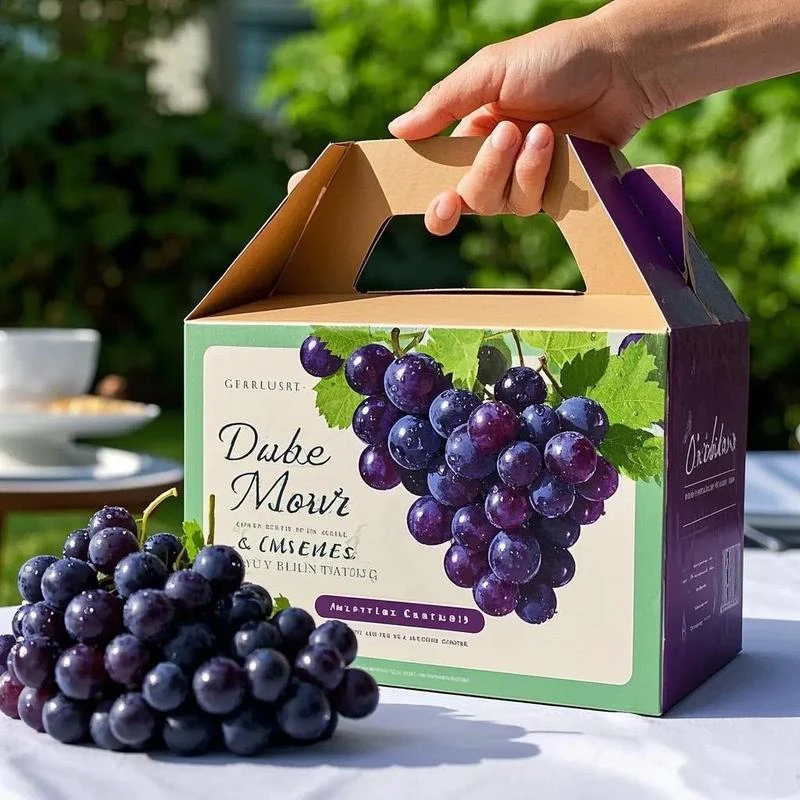
Fruit packaging is not only about protection. In modern retail and export markets, it is also about branding, appearance, and cost efficiency.
1. Excellent printing performance
Fresh fruit packaging often includes:
- Brand identity
- Colorful graphics
- Product origin information
- Marketing messages
E-flute provides a smooth surface that allows:
- Higher printing resolution
- Sharper graphics
- More consistent color reproduction
- Better shelf impact in supermarkets
This is one of the biggest reasons why premium fruit brands prefer E-flute cartons.
2. Lightweight structure reduces logistics cost
Fruit is usually transported in high volume.
Even small weight differences per carton can significantly affect total shipping cost.
E-flute helps reduce:
- Carton weight
- Freight cost per box
- Air or express delivery cost
This is especially important for export fruit packaging and e-commerce distribution.
3. Balanced strength for light-to-medium loads
Although E-flute is thinner than B or C flute, it still provides sufficient structural support when properly designed.
It is suitable for:
- Grapes
- Citrus fruits
- Apples
- Strawberries
- Peaches
Especially when combined with:
- Inner trays
- Foam nets
- Partition structures
In these cases, strength comes from packaging design, not only board thickness.
4. Better appearance for retail and gift packaging
E-flute cartons have a more refined and premium appearance.
They are widely used in:
- Supermarket-ready packaging
- Gift fruit boxes
- High-end brand packaging
Compared with coarse corrugated surfaces, E-flute looks more like a consumer product box rather than a transport carton.
5. Efficient material usage and production cost
From a manufacturing point of view, E-flute requires:
- Less raw paper material
- Lower board thickness
- Faster conversion efficiency in many cases
This results in:
- Lower material cost
- Higher production output per ton
- Better cost control for mass production
When Should You NOT Use E-Flute?
Despite its advantages, E-flute is not suitable for all packaging scenarios.
❌ Heavy-duty transportation
If cartons are used for:
- Bulk loading
- Heavy fruits
- Pallet stacking
- Long-distance sea freight with high compression
E-flute may not provide enough stacking strength.
❌ High compression environments
In warehouse stacking or container loading, cartons are exposed to continuous vertical pressure.
In such cases, deformation risk increases.
❌ Rough handling logistics
If transportation conditions are unstable or involve frequent rough handling, stronger flute types are recommended.
Disadvantages of E-Flute Corrugated Board
To summarize the limitations clearly:
- Lower stacking strength than B/C flute
- Limited impact resistance
- Not suitable for heavy load export cartons
- Requires more precise structural design
In short:
E-flute is designed for “appearance + efficiency”, not “maximum strength”.
E-Flute vs Other Flute Types (Quick Understanding)
- A / C flute → Heavy-duty cartons
- B flute → Balance of strength and printing
- E flute → Printing quality + retail packaging
- Double wall → Industrial transport packaging
Which Machines Are Suitable for E-Flute Production?
Because E-flute is thinner and more delicate, it requires more stable and precise converting equipment.
In corrugated carton production, the key processes include:
- Printing
- Slotting
- Die cutting
- Folding & gluing
1. Flexo Printer Slotter Die Cutter
This is the most important machine for E-flute cartons.
It ensures:
- Stable sheet feeding without deformation
- High-precision color printing
- Clean slotting and creasing lines
- Consistent registration accuracy
Especially important for fruit cartons with branding.
2. Carton Folder Gluer Machine
Used for:
- High-speed folding
- Stable gluing of thin corrugated board
- Consistent carton forming
E-flute requires precise control because the board is thinner and easier to deform.
3. Die Cutting Machine
Used for:
- Special-shaped fruit boxes
- Handle openings
- Ventilation holes
- Premium retail packaging designs
How Our Machines Support E-Flute Production
At Jeytop Carton Machinery, our equipment is designed to handle different flute types, including E-flute corrugated board.
We focus on:
- Stable feeding system for thin board
- Precise printing registration control
- Adjustable pressure system for delicate materials
- Clean and accurate die-cutting performance
Recommended Equipment
These machines are widely used in:
- Fruit packaging factories
- Export carton manufacturers
- Retail packaging producers
Conclusion
E-flute corrugated board is not just a material choice — it represents a balance between appearance, cost, and production efficiency.
That is why it is widely used in fruit packaging, especially in modern retail and export markets.
However, the correct flute selection always depends on:
- Product weight
- Transportation distance
- Packaging structure design
- Cost target
- And production capability
And most importantly:
The final packaging quality is not only determined by material selection, but also by the precision and stability of your corrugated carton machinery.